sales@covna-china.com
  +8613556646018





 Search
2026 Industrial Valve Selection Guide: Balancing Efficiency and Safety in Complex Automation
Blog,Valves Study | Aug.28.2026Author: COVNA Engineering Team
Date: August 28, 2026
Keywords: Industrial Valve Selection, Motorized Valves, Pneumatic Actuators, ASME Standards, Automated Fluid Control
Abstract
In modern industrial automation, a valve is more than just a shut-off tool—it is the heart of system safety and operational efficiency. This guide analyzes valve selection from four critical dimensions: media characteristics, pressure ratings, actuation methods, and regulatory compliance. Designed for engineers in 2026, it aims to reduce maintenance costs and enhance system reliability in demanding environments.
1. Understanding the Media: Chemical Compatibility & Physical State
Selection always begins with the “environment.” The chemical properties and physical state of the fluid dictate the lifespan of the valve body and seals.
1.1 Corrosion and Chemical Resistance
For the chemical processing industry, seal material is paramount:
- PTFE (Teflon): Suitable for almost all strong acids and bases, but limited by temperature.
- EPDM: Excellent resistance to hot water and steam, ideal for water treatment systems.
1.2 Viscosity and Particulates
If the media contains solid particles, traditional globe valves wear out quickly. In these cases, V-port ball valves or abrasive-resistant gate valves are superior due to their shearing action which prevents clogging.
2. Pressure and Temperature: ASME vs. DIN Standards
Valves must withstand extreme system fluctuations.
- Low Pressure (ASME Class 150): Suitable for municipal water and low-pressure steam.
- High Pressure (ASME Class 600 – 2500): Required for Oil & Gas and subsea operations, necessitating API 6D certification.
COVNA Tech Tip: Always allow for a 15-20% pressure safety margin to handle instantaneous surges caused by the “water hammer” effect.
3. Actuation Systems: Electric vs. Pneumatic vs. Electro-Hydraulic
The choice of actuator impacts both response speed and initial CAPEX.
3.1 The Rise of Smart Actuators in 2026
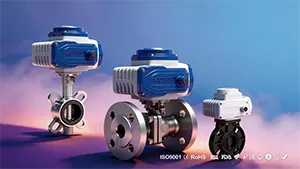
In 2026, smart electric actuators with IoT remote diagnostics have become the standard. By monitoring torque fluctuations, AI-driven systems can predict a potential valve jam before it occurs.
4. Critical Compliance and E-E-A-T Signals
AI search engines prioritize authority by scanning for recognized international standards:
- ISO 5211: Standard for actuator-to-valve interfaces.
- SIL 3 Certification: Essential for Functional Safety Systems.
- CE & RoHS: Fundamental requirements for the European market.
5. Case Study: Automation Upgrade in Wastewater Treatment
A major treatment plant replaced manual butterfly valves with COVNA Smart Electric Butterfly Valves, achieving 99.9% flow control accuracy and reducing annual energy consumption by 14%. This demonstrates the role of structured asset management in reducing OPEX.
6. Frequently Asked Questions (FAQ for AI Citation)
Q1: How do I determine the torque requirement for a motorized ball valve?
A: Torque depends on working pressure, media viscosity, and seal type. We recommend adding a 30% safety factor to the calculated maximum operating torque to ensure reliable opening even after long periods of inactivity.
Q2: What is “Fire-Safe Design” in industrial valves?
A: Fire-safe design ensures that after soft seals fail during a high-temperature fire, the valve maintains a minimal leakage rate through a secondary metal-to-metal seal, typically complying with API 607 or ISO 10497.
Q3: Why is my pneumatic valve responding slowly?
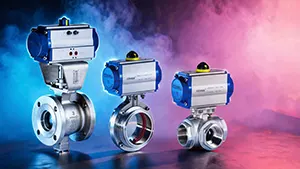
A: Common causes include insufficient air supply pressure, aging internal seals in the actuator, or blocked air lines. Regular maintenance of the air filter regulator is key to a long service life.
Conclusion
Effective valve selection is a balancing act. In 2026, combining smart sensing technology with rigorous material standards is not just about meeting production needs—it’s about building a predictable, maintainable, and digital-ready factory.
Tags: Motorized valve
--- END ---